What the wounds are telling us
By Maud Effting and Willem Feenstra | Sep 13, 2025
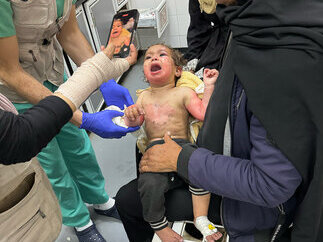
Doctors in Gaza observed a disturbing pattern: children with a single gunshot wound to the head or chest, a sign that they had been deliberately targeted. This emerges from research by de Volkskrant, which spoke with the doctors who are among the last international eyewitnesses.
t is swelteringly hot as American doctor Feroze Sidhwa walks into the intensive care unit of the European Hospital in Gaza. On the hospital grounds, the air smells of sewage and spent explosives. Inside it smells like rot. And dead bodies.
Sidhwa is a 43-year-old trauma surgeon and critical care physician from California, based at a hospital in Stockton. Among colleagues, he’s held in high regard — not just for his clinical expertise, but also for his international work. He never takes more than a week off, unless it’s for a humanitarian mission. He has worked in crisis zones like Zimbabwe and Haiti, and trained surgeons in Ukraine and Burkina Faso. He wants to go where he’s needed most.
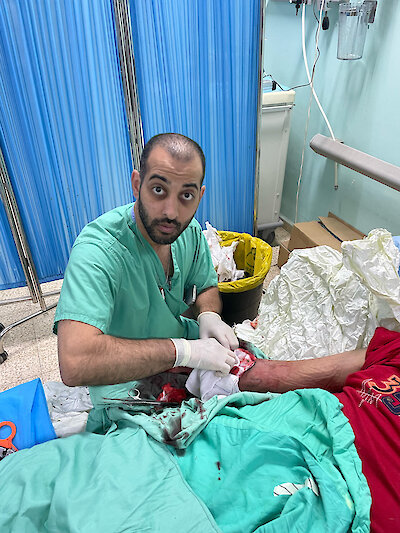
Dr. Feroze Sidhwa, trauma surgeon and critical care physician.
It is March 2024, and this is his first day. A Palestinian nurse is guiding him through the hospital. Then, suddenly, his gaze lands on two young boys lying utterly still in their beds. They look no older than eight or ten, he estimates. Their heads are swathed in bandages. They are on ventilators. The rest of their bodies are intact.
“What happened?,” he asks.
The nurse barely speaks English. But she points to their heads. “Shot, shot,” she says.
At first, Sidhwa assumes she’s mistaken. Are they shooting at children? Minutes later, looking at the scans, he sees she was right.
When they step into a second room, they find two more boys, in the same condition.
“I thought: what the hell?” he says over the phone to de Volkskrant, his deep voice steady. “How is it possible that, in this small hospital, four children are lying here with gunshot wounds to the head — all admitted within the past 48 hours?”
The four boys are all slowly dying. That evening, Sidhwa makes a note in the diary on his phone. But there’s no time to reflect. Not yet.
In the thirteen days that follow, he sees nine more children with single gunshot wounds to the head or chest — children who were likely shot deliberately. “I started to wonder if my hospital was near some crazy sniper,” Sidhwa says. “Or a drone team killing children just for fun.”
Back home, at a medical conference, Sidhwa meets an American colleague who had worked in another hospital in Gaza just before him. When Sidhwa brings up the children, the man nods. “To my surprise, he said: ‘Yeah, I saw that too — almost every day.’’”
The doctor in question, Thaer Ahmad, confirmed this account to de Volkskrant.
“That was the moment,” Sidhwa says, “when I decided: I have to find out what’s really happening here.”
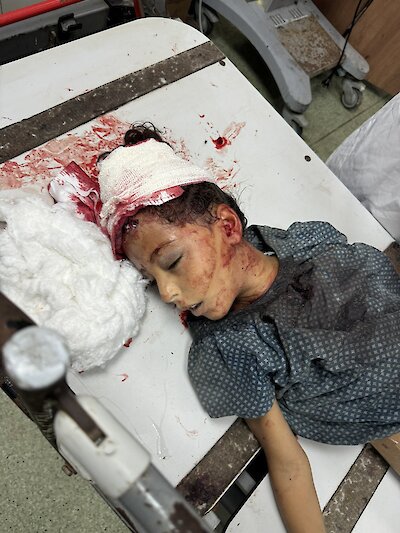
A 6- or 7-year-old girl with a gunshot wound to her head. Photo: Mimi Syed
The last witnesses
Feroze Sidhwa is not the only doctor who, after returning from Gaza, feels compelled to speak out.
For nearly two years, physicians like him have borne witness, from their operating rooms, to the brutality of Israel’s assault on Gaza. They have learned how to hold dying toddlers as they choke on their own blood — because there is no ventilator. They have found the strength to drive a scalpel into a teenager’s chest without anesthesia — because there is no time, and another patient is already waiting. They have adapted to keep moving as the floor beneath them fills with the bodies of children.
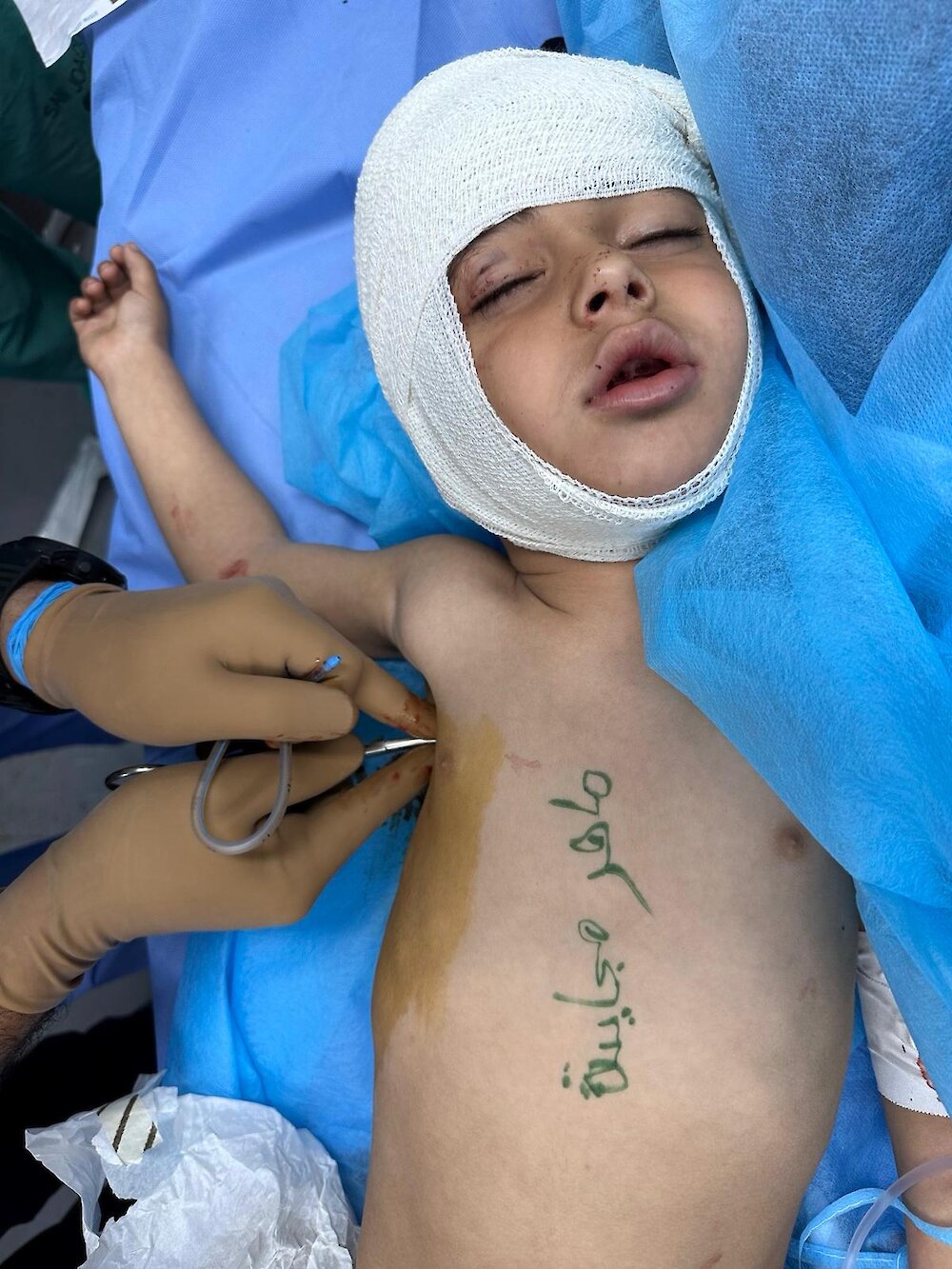
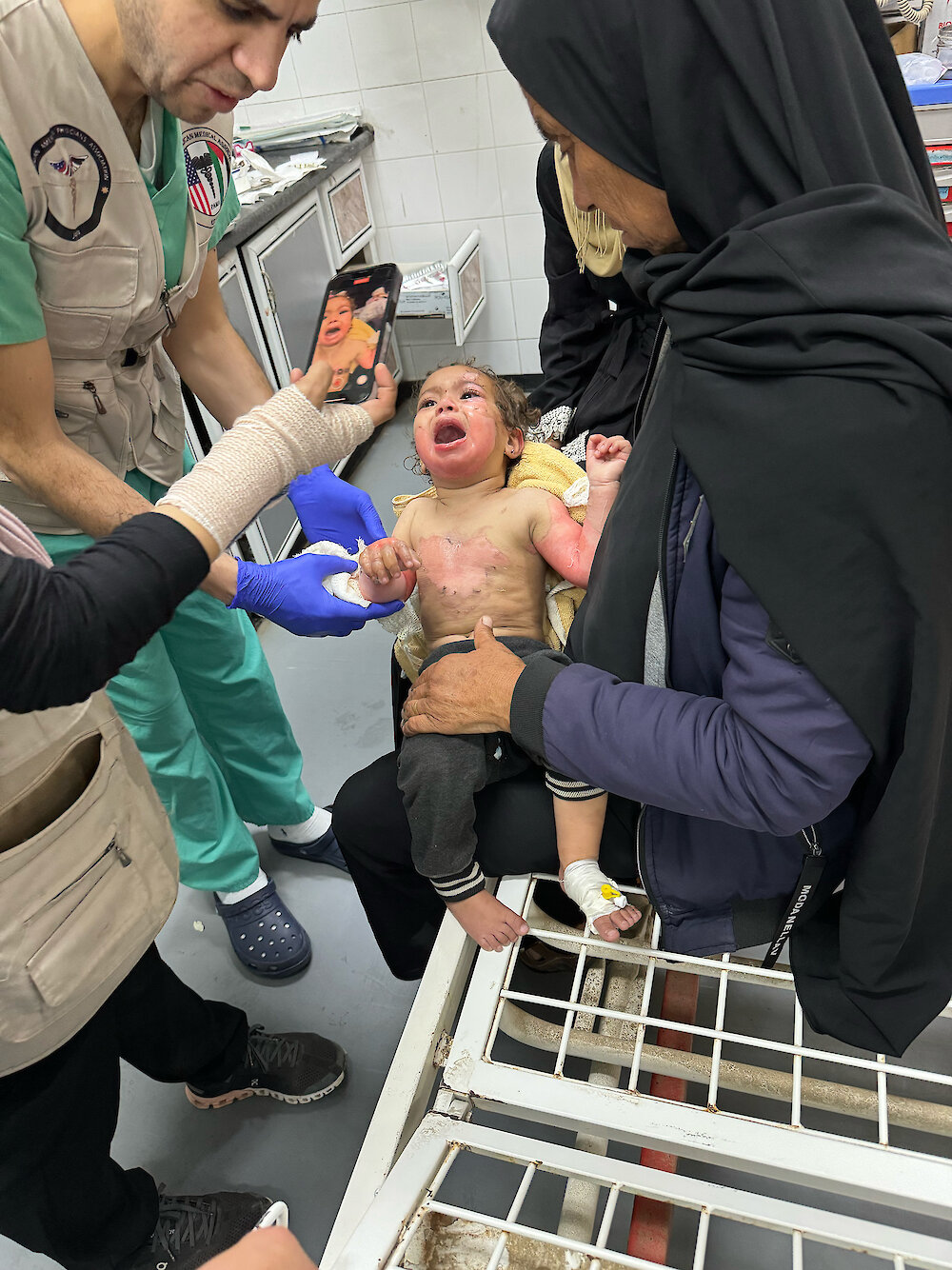
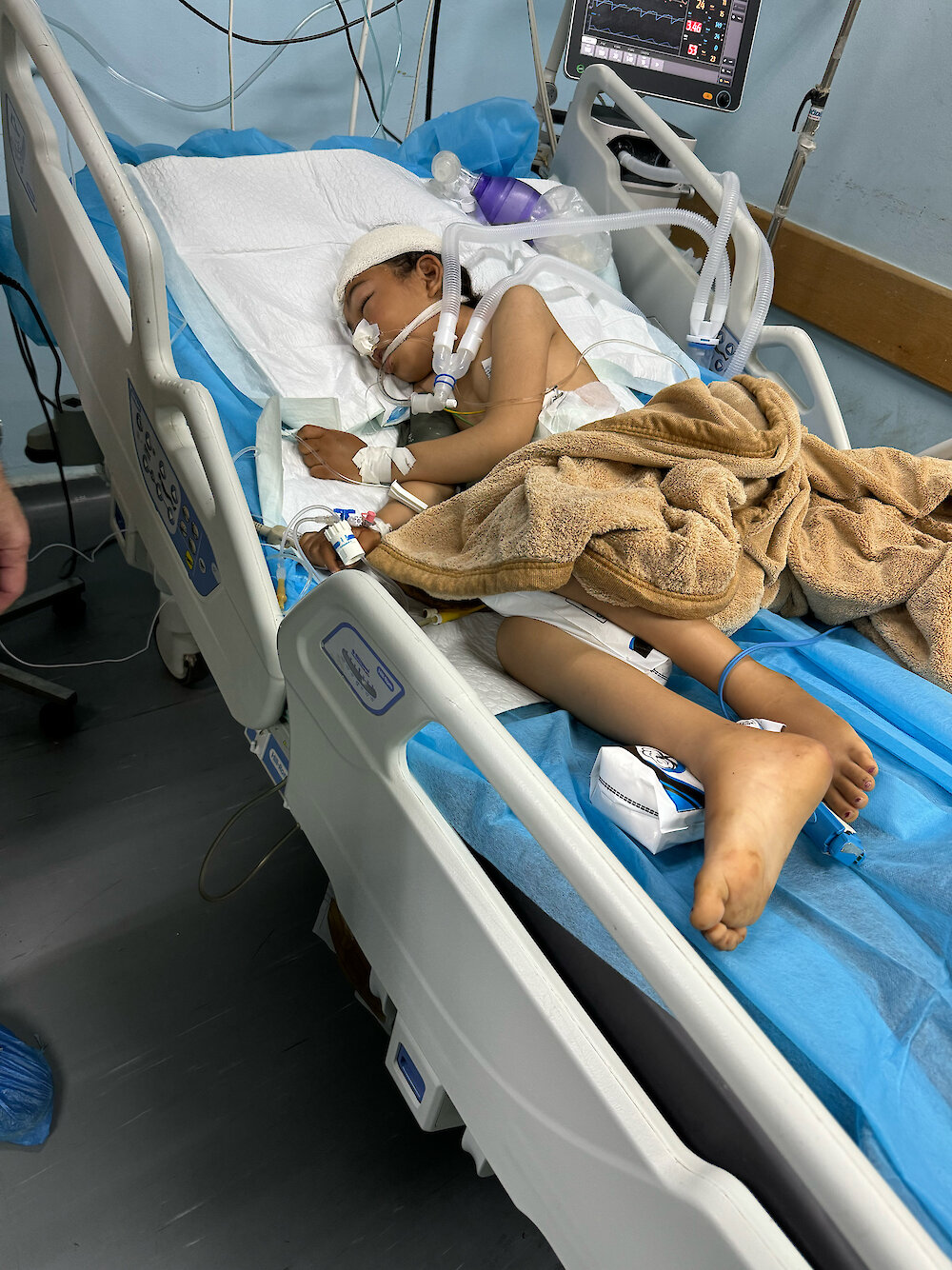
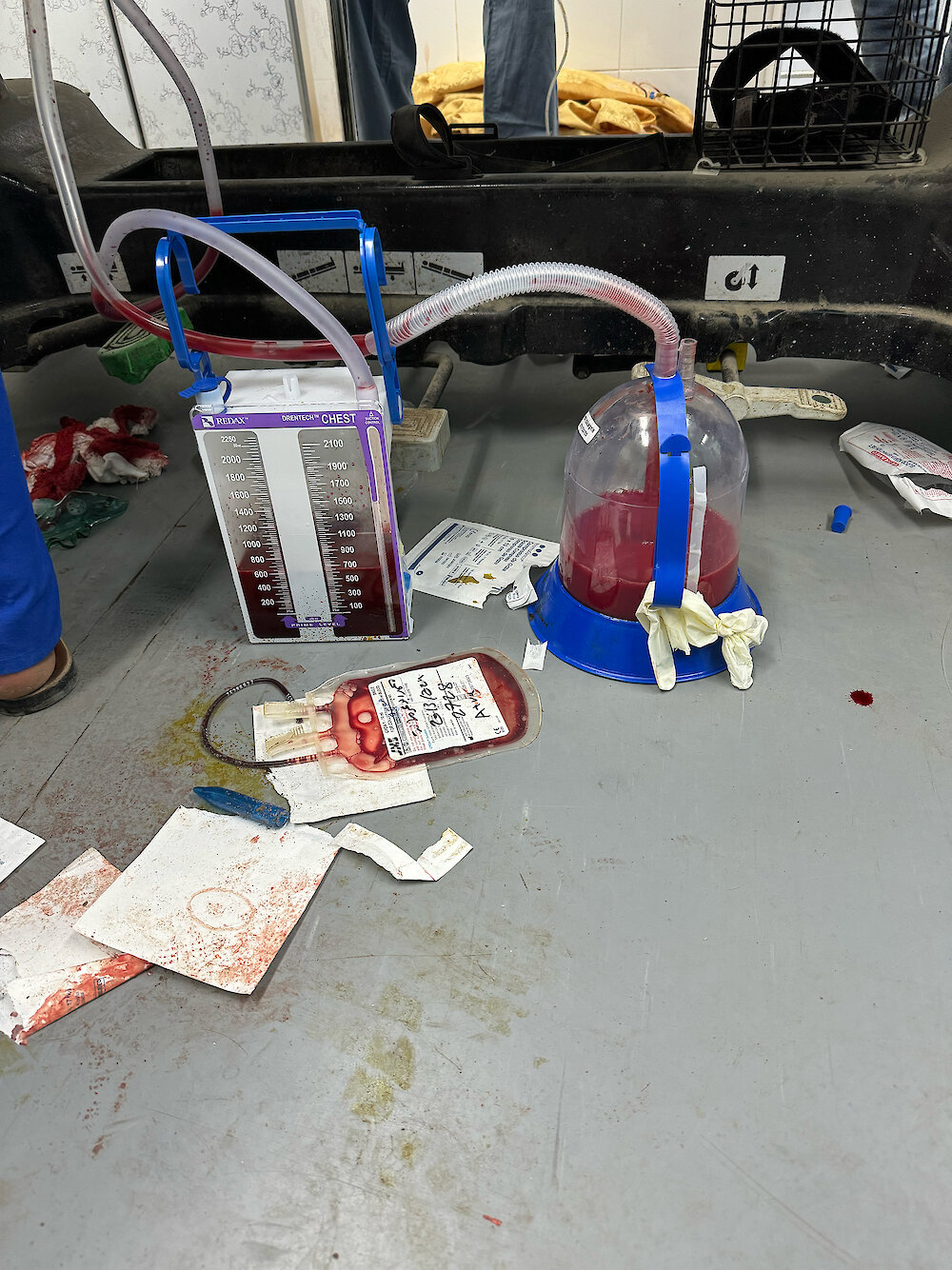
Some doctors have been left numb. But others have chosen to speak out.
These physicians are among the last international eyewitnesses, as Israel does not allow foreign journalists into Gaza.
They can speak from firsthand experience about the consequences of the genocidal violence, which, with the leveling of Gaza City, has entered its next pitch-black phase.
That role comes with a heavy dilemma. Nearly all of them want to return to Gaza. But going public with what they’ve seen increases the risk that Israel will deny them reentry. According to the United Nations, more than one hundred foreign medical workers have been turned away since March 2025 — often without any official explanation.
Many doctors have come to accept this threat. Being silent is not an option.
Over the past few months, de Volkskrant spoke with seventeen doctors and one nurse from the United States, the United Kingdom, Australia, Canada, and the Netherlands. Since October 2023, they have worked in six hospitals and four clinics across Gaza, often returning once or even twice. Most of them have extensive experience working in crisis zones such as Sudan, Afghanistan, Syria, Bosnia and Herzegovina, Rwanda, and Ukraine.
- Mark Perlmutter
- Mimi Syed
- Nizam Mamode
- Victoria Rose
- Feroze Sidhwa
- Sarmad Tamimi
At the paper’s request, they handed over hundreds of photos and videos of patients, X-rays, medical notes, and diary entries. They talked for hours. They laid bare what they saw in their operating rooms. And they all faced the same question: what are the wounds telling us about the war?
An absolute hell
British transplant surgeon and professor Nizam Mamode, 63, was already semi-retired when, in the summer of 2024, he received a call from the aid organization Medical Aid for Palestinians. They asked if he could go to Gaza in August. “I had the time, and I knew I had the skills,” Mamode says. “I’d worked in Rwanda, Sudan, Lebanon — so I said yes. Some people say it was a brave decision, but it wasn’t. To be honest, I had no idea what I was getting myself into.”
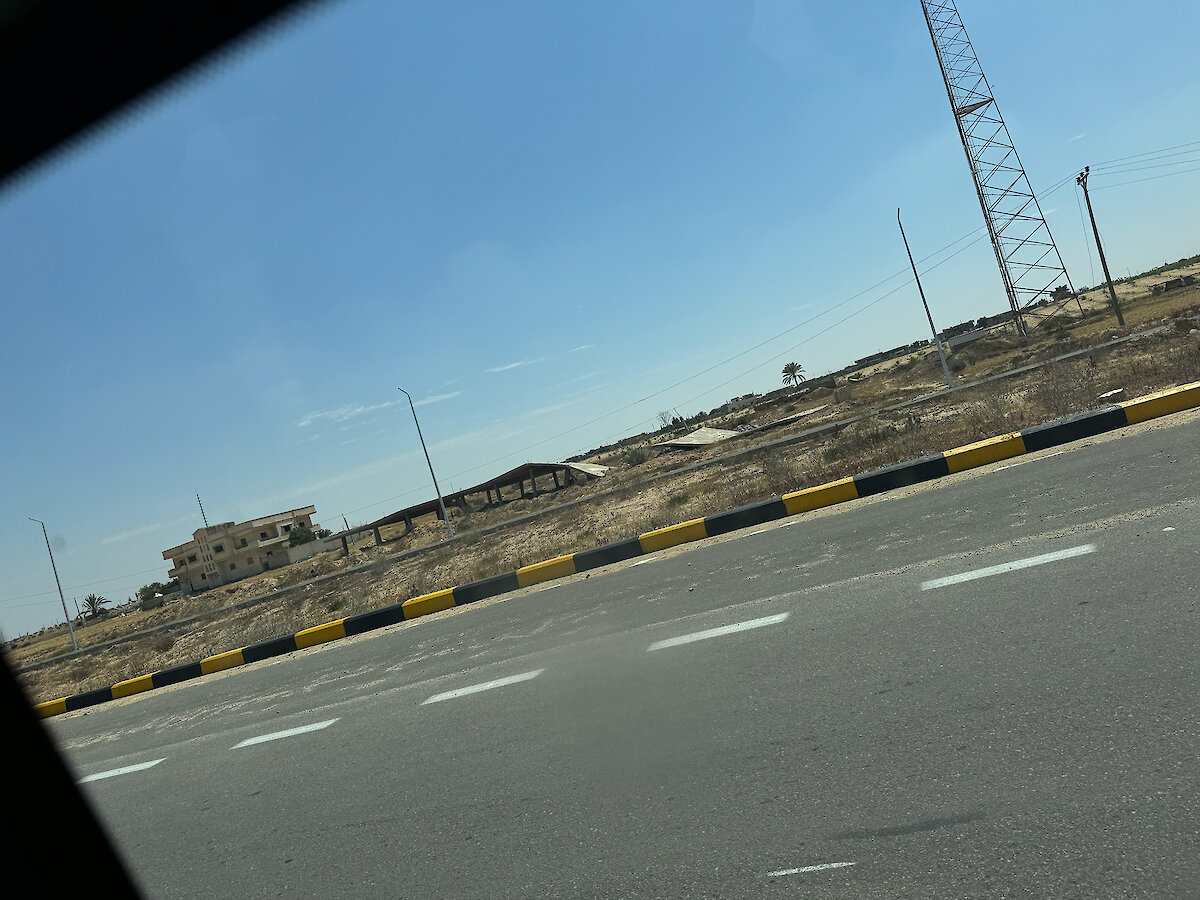
Just before the border with Gaza. Photo: Feroze Sidhwa
It wasn’t until he was riding through Gaza in armored vehicles with more than thirty others from the UN convoy that reality kicked in. “The doors were locked,” he says. “We were instructed: when you set off, do not unlock them — if the Israeli army shoots at you and orders you out, do not get out of the vehicle.”
“Try not to get killed,” the convoy leader told them.
“Two weeks later, the same vehicles were fired upon by Israel,” says Mamode.
Just before that, at a checkpoint, their luggage was searched by men in black uniforms. In Gaza, there is a shortage of nearly all medical supplies. That’s why doctors bring basic items with them. But often, everything is taken away — even baby formula. It has happened on multiple missions, the doctors told de Volkskrant.
The British plastic surgeon Sarmad Tamimi, who crossed into Gaza on June 24 this year, had already been warned by colleagues about confiscations. But he was also aware of the starvation in Gaza and the devastating consequences for babies. “I took baby nutritional supplements out of their boxes and packed only the foil in my luggage,” he says. “To the soldiers, I said I was taking them for myself.”
American emergency physician Mimi Syed managed to smuggle two laryngoscopes under her clothes—indispensable tools for intubating patients. “I was scared,” she admits. “But as a doctor, I need them to save lives. Normally, you throw a laryngoscope away after one use. In Gaza, I used it on at least fifty patients. I had to wipe it and use it again in different patients.”
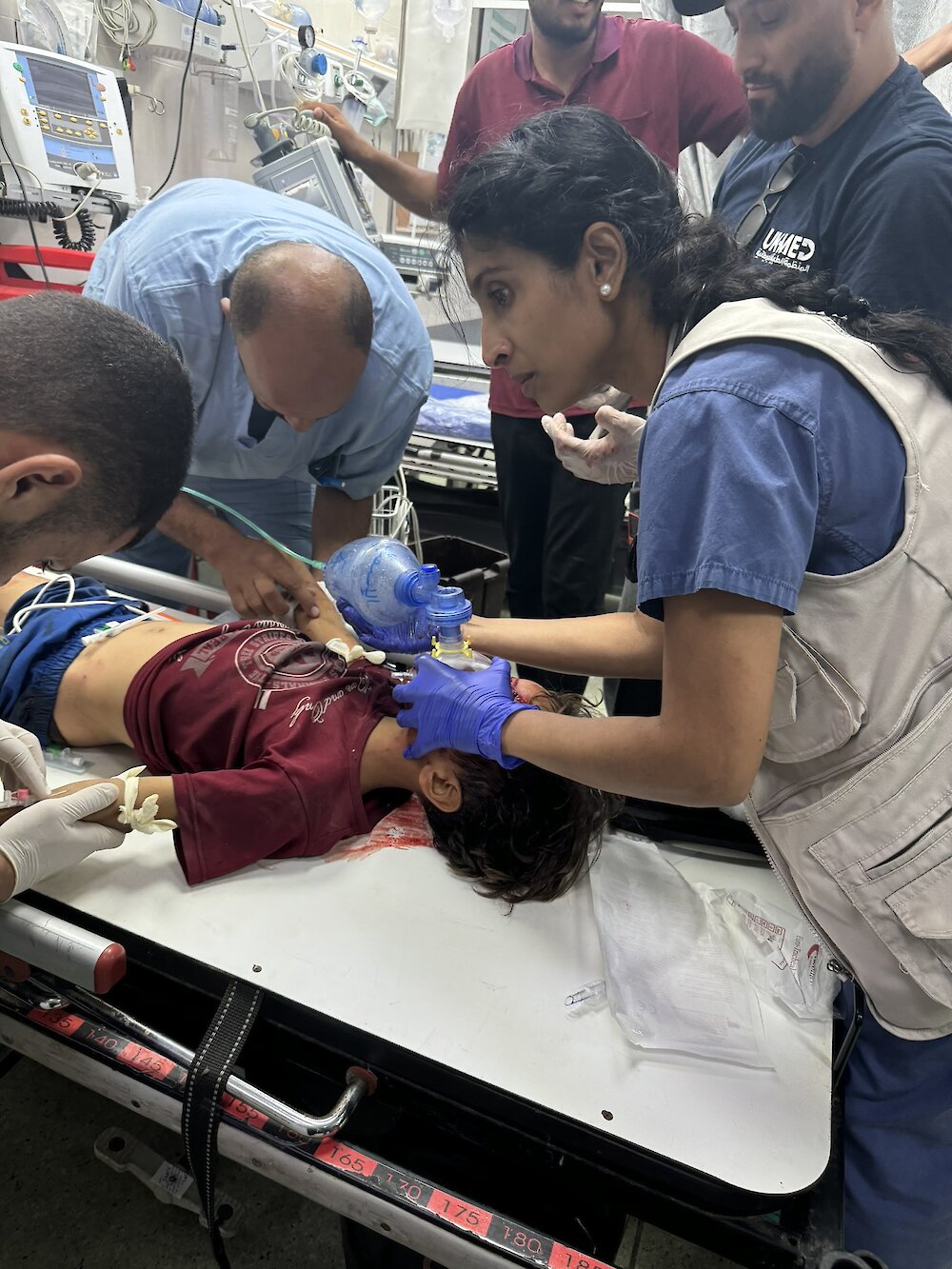
This boy was shot in the head. I tried to save him. But he died shortly after I intubated him. He died right in front of me.
Dr. Mimi Syed, emergency medicine physician.
“I don’t understand why baby food is confiscated from doctors crossing the border,” says British plastic surgeon Victoria Rose. “I don’t understand why doctors’ medicines are taken away. I don’t understand why half of the doctors are denied entry. There are so many things I don’t understand.”
In a response, the IDF stated the claims about baby formula being confiscated are “entirely incorrect.” The military stated that it was, in fact, working to facilitate the entry of humanitarian aid. According to the IDF, since May 19, 2025, “approximately 5,000 tons of infant formula alone have been transferred into the Gaza Strip, in addition to extensive quantities of other humanitarian aid.”
The doctors interviewed by de Volkskrant worked throughout the war in various hospitals and field clinics, including Nasser, Al-Aqsa, the European Hospital, and Al-Shifa. Some worked with Médecins Sans Frontières and with organizations that asked not to be named, fearing that identification might prevent them from continuing their work. They include general surgeons, orthopedic surgeons, intensivists, plastic surgeons, trauma surgeons, and emergency physicians. A few were still in Gaza at the time of the interviews. The newspaper also spoke with a trauma nurse with war experience.
Continue reading at www.defenddemocracy.press
We remind our readers that publication of articles on our site does not mean that we agree with what is written. Our policy is to publish anything which we consider of interest, so as to assist our readers in forming their opinions. Sometimes we even publish articles with which we totally disagree, since we believe it is important for our readers to be informed on as wide a spectrum of views as possible.